
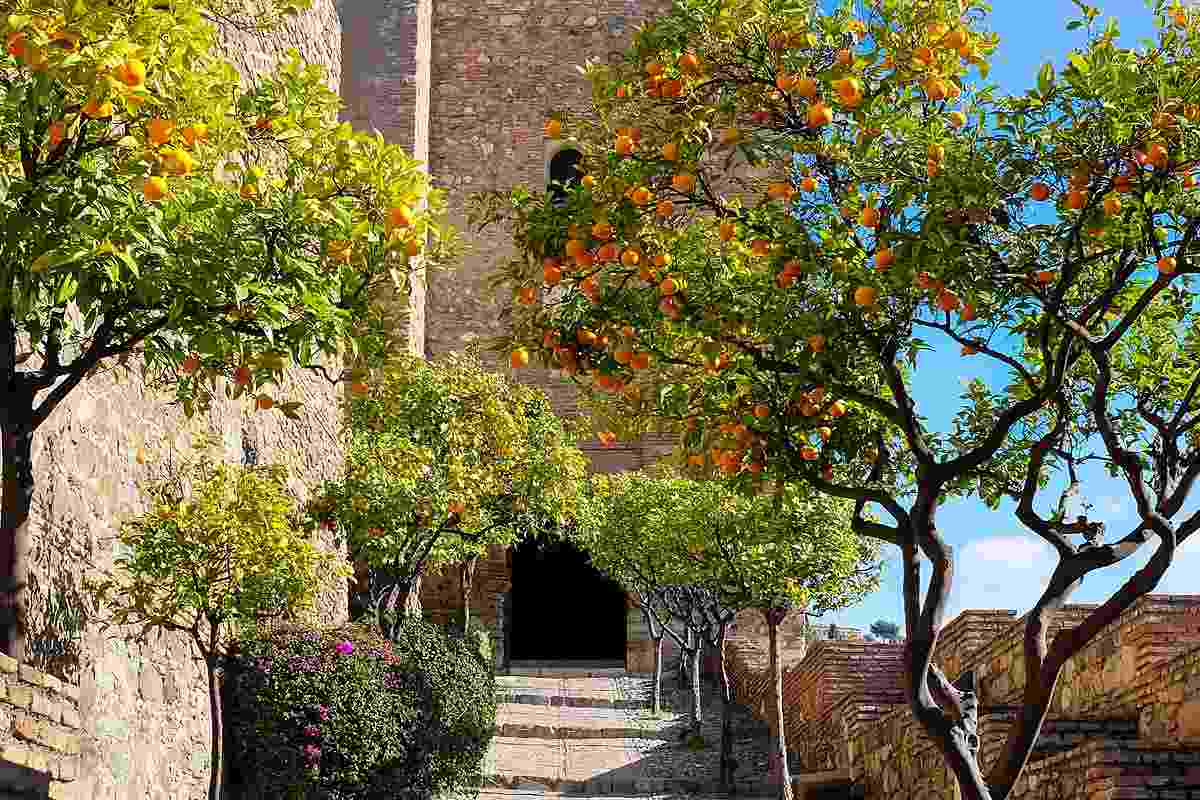
As you go on a walk around Málaga, you may have noticed small trees with orange fruits embellishing the streets of Centro Histórico. You can find them nearly everywhere. From the gardens of Alcazaba to Paseo del Parque and throughout the whole city center. These orange trees, whose fruits taste anything beside sweet, are typical for Andalusia’s cities.
A million kilograms of oranges
Around 12,000 trees alone in Málaga produce up to a thousand tons of naranja agria – bitter oranges. Due to a lot of bad weather, only 700 tons could successfully be harvested in 2026. Still, the harvest between January and March all around Andalusia provides way more oranges than needed.
However, these bitter oranges are not suitable for the food retail. The Asociación para la Defensa de la Naranja Amarga (ADNA) prohibits their sale for consumptions, as they would absorb pollutants from road traffic. Instead, the city of Málaga found their own ways of reusing their street oranges.
Export to the Netherlands
The probably biggest export partner for Málaga’s bitter oranges is a Dutch company. “PeelPioneers” buys the street fruits and further processes the orange peels – and they get creative with it. The company produces oils, pastry ingredients and even various cleaning products.
Historically, the peels’ oil was used by the Moors to make perfume, infusions, ointments and herbs, as well as medicine. But the naranjas agrias are not native to Spain. It is more likely that they came with the Phoenicians from China to Europe.
For a long time, due to the surplus of the street oranges, the city of Málaga had to throw most of them away. Eventually, they discovered to use the fruits as local compost instead of wasting the majority of them. Nowadays, not needed oranges get selled. Not only to “PeelPioneers”, but also to the confectionery industry. Mostly, they use the bitter oranges to make chocolate and praline flavors.
Bitter oranges for the Royal Family
But Málaga is by far not the only city rich of the bitter oranges. The province of Huelva, for example, processes their oranges into orange vine. With nearly over 40,000 street orange trees, Seville is the clear winner regarding the amount of fruits that they can harvest each year.
The city uses their bitter oranges slightly different from Málaga. Tourists visiting the Andalusian capital, often take a jar of bitter orange marmelade home with them. This marmelade is known to be delivered to the Royal Family of Great Britain, too. However, most people do not know that these are not the street oranges you see around Seville. Instead, for the marmelade, they process bitter oranges from organic plantations around the city.
Since 2022, the street oranges of Seville’s trees are also used in biogas production.
Next time you walk around Málaga’s streets, maybe you are lucky enough to wittness the street oranges in all its splendor. Even if not, trying one of the various products made of the local fruits is worth a try.