
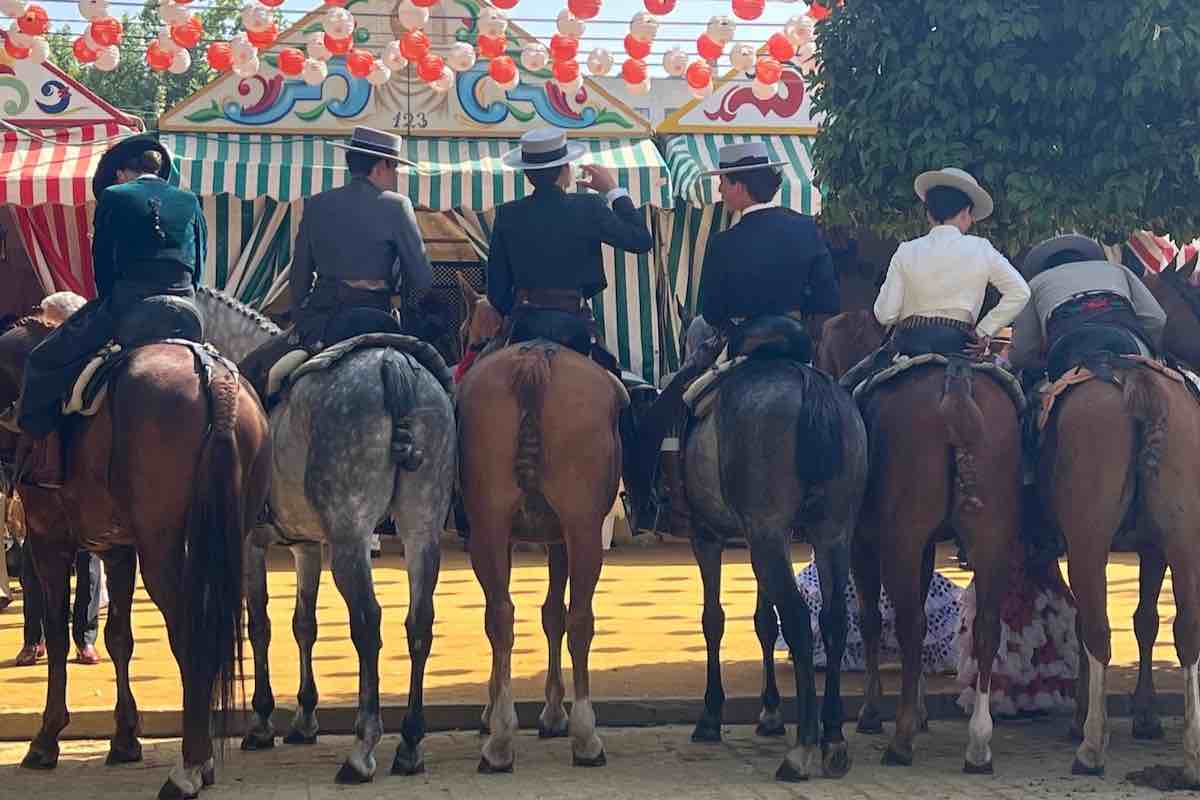
The Feria de April in Sevilla ended now almost a week ago. But our author still has the impressions of the festival stuck in her head. Especially the treatment of the horses is haunting her.
Feria de Abril: Initial Impressions
We often wonder what it would be like to time travel. As I left Seville’s Feria de Abril, I reflected that this would probably be the closest I could ever come to such an endeavour. The city’s historic Cathedrals and parks were littered with woman sporting classic polka dot dresses and what resembled noble families in horse-drawn carriages. As we walked towards the Los Remedios neighbourhood, where the Feria takes place, the few dressed up became hundreds. It was as though I’d fallen into some sort of Buñuel style Bourgeoisie land. Flamboyant tents matched flamboyant dress and friends and families could be seen indulging in drinks and extravagant meals. Once recovered from the initial excitement of this surrealist circumstance, I became quickly disillusioned by the obvious suffering that surrounded the fantastical illusion.
Everywhere, horses appeared on the brink of collapse. Their mouths frothed, forced open by a harness, gasping for water and air. They dragged carriages all day long, often appearing restless and attempting to run free, but held back by the riders. It was distressing to see, and withdrew from the happy atmosphere of traditional dress, dance and drinking.
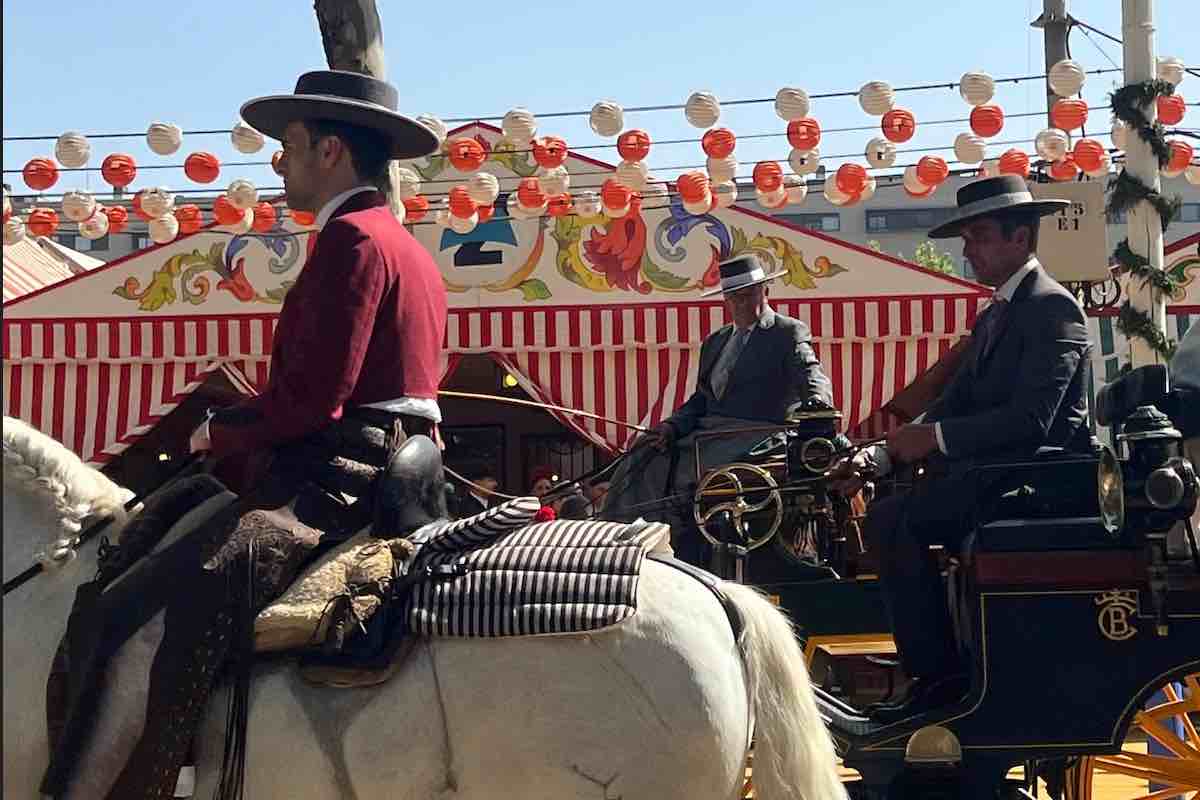
Tourists Horrified by Horses in Pain
One tourist who had taken the bus from Malaga for the day left early, unable to watch the suffering and people’s indifference to it. She spoke of her disgust at seeing a man ignoring a struggling horse. The animal was clearly thirsty, tired and in pain. When its owner noticed he took a bottle of water from his bag only to drink it himself and leave the creature gasping for hydration. She could not bear to watch living beings treated as machines.
Another tourist, who had also travelled specifically for the Feria, expressed her outrage. She remarked that the horses suffering at the hands of people was inhumane, and the festival would be better without them. With no horses it would improve its moral standard, but also be less crowded, chaotic and the streets would not be covered in excrement. The smell of defecation added to the discomfort of the affair.
Some argue that such treatment of horses may be understood for the preservation of culture and historic practice, but such arguments are weak when clear wrongdoing is taking place. It is understandable that locals would like to conserve the historic feel and tradition of their spring festival but they cannot continue to ignore the deep sufferance horses are placed under: dehydrated, tired, overheating and unable to move freely. There is no justification to continue to enslave these animals.
Previous Protests from Locals and Animal Rights Organisations
These tourists are certainly not the first individuals to have expressed their disdain for the horses distress. Many have previously protested against horse drawn carriages across Spain, and particularly relating to the Feria de Abril. For example, following the death of a horse in 2024 Seville locals reported the Feria to their Government and the animal rights group Guardia Civil’s Nature Protection Unit (SEPRONA), hoping to induce a ban on the exploitation of horses. They expressed horror at the dramatic death of a horse in the middle the 2024 festival, commenting “another year, another horse died”. There have also been reports of horse deaths in 2018, 2022, and 2023; people are becoming frustrated with the lack of action taken.
The Spanish political party PACMA (Party Against Animal Abuse) continue to fight hard against maltreatment. Unfortunately, thus far little has changed as people argue for the conservation of tradition and culture.