
Some consider Malaga’s greatest cultural export to have been the renowned painter, Pablo Picasso. I confess I cannot disagree. Following a rainy day visit to Malaga’s Picasso Museum, I left feeling inexplicably altered. What struck me most was the complete originality with which Picasso interpreted the world in his conception of Cubism. His revolutionary artistic movement attempted to deconstruct what humans literally see before them, reducing familiar subjects into abstract forms that altered the normal perspective. I sort to explore what this meant, and how Cubism was conceived.
Picasso: The Pioneer of Cubism
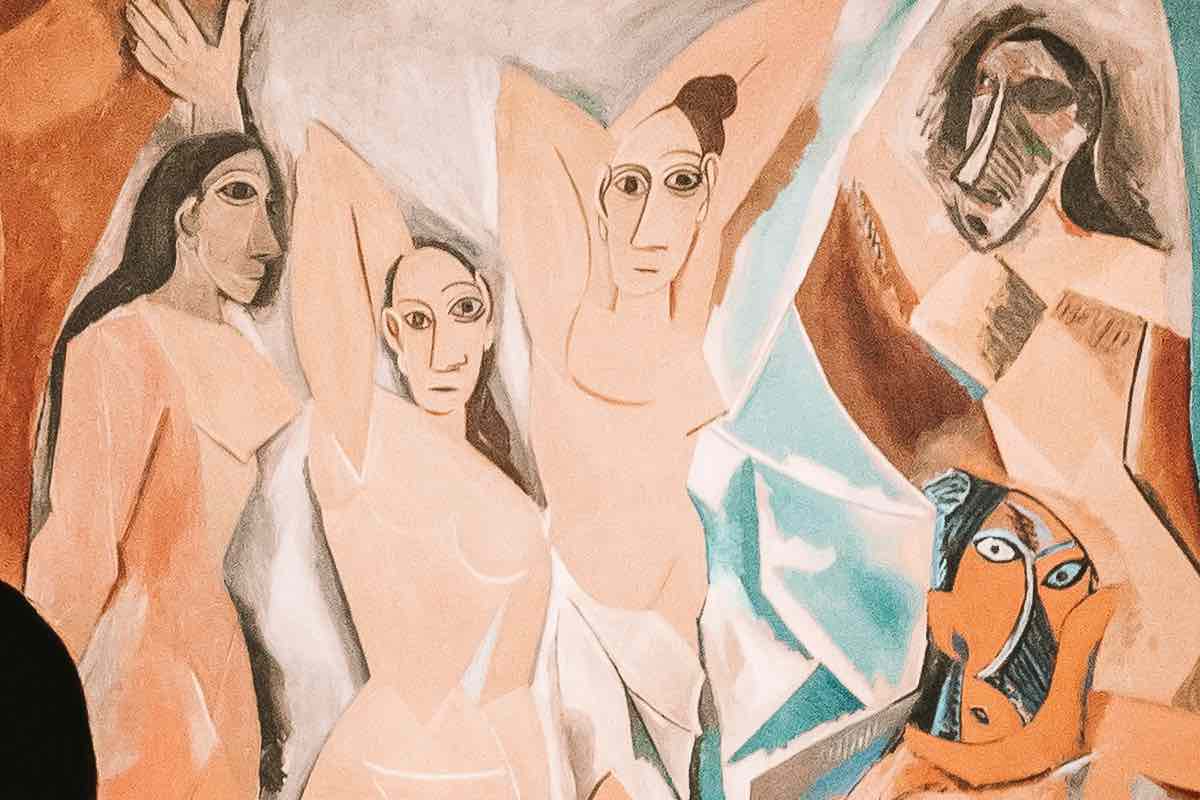
Cubism is said to have begun with Picasso’s 1907 painting, “Les Demoiselle d’Avignon”, where five naked prostitutes are portrayed on a street in Barcelona, as pictured above. Their bodies are comprised of slightly distorted geometric shapes and two of their faces are completely altered; realist dimensions no longer play a role, as eyes, nose and mouth are placed to emphasise a 2D perspective. This composition of the human face later becomes incredibly common in Picasso’s later work. One of his most famous is of the Weeping Woman (1937), which displays the fragmented sorrow of those grieving the losses and destruction of the Spanish Civil War. This deconstruction of emotion may appear to simplify what we see before us, but in actual fact renders emotions more harrowing and touching in their abstraction. The woman’s angular features capture the jagged pain of grief that people hide behind the softness of their flesh.
Picasso famously observed that the head was simply “a matter of eyes, nose, mouth, which can be distributed in any way you like.” Such an observation draws into question how humans understand and define their reality. To what point can we deconstruct objects and still recognise what they are? Is a table still a table if its legs aren’t attached?
Georges Braques; the Cubist’s accomplice
Though Picasso is considered the centre of the Cubist movement, many others, such as painter Georges Braques, were equally as essential. The term cubism came from critic Louis Vauxcelles description of Braques’ 1908 painting, Maisons a l’Estaque. He stated that the art piece, which depicts a group of houses, reduces everything to “geometric schemes and cubes”.
Braques’ involvement does not end here. Both him and Picasso continued to paint in these abstract terms and a dialogue established itself between them. They would paint, responding to each other’s art, sometimes not signing their names so audiences could not even distinguish who had painted what.
West and Central Africa’s Influence
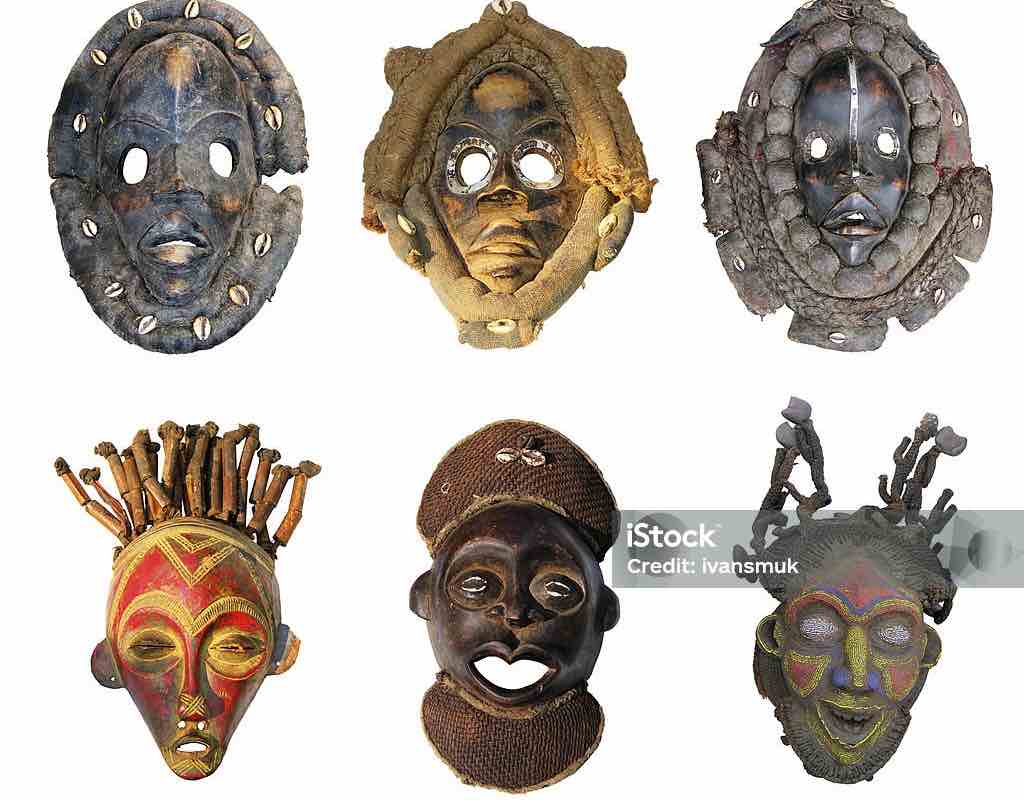
However, there is a far more significant influence which has been ignored by voices who dominate the cultural narrative. The primary inspiration for Picasso’s original style came from the masks and sculptures constructed in West and Central Africa, particularly in French colonies. He saw these objects primarily in the Musée d’Ethnographie and reconstructed faces reminiscent of their form. Namely, in the painting Les Demoiselle d’Avignon, which pioneered the movement, as mentioned earlier. Two women are pictured with dark and triangular faces, completely reminiscent of the Dan masks of the Ivory Coast, or the Fang people of Northern Gabon and Southern Cameroon. The masks symbolised the spirits that protected tribes and offered social guidance. Their noses appear similarly jagged, and their features slightly misplaced.
In fact, the art critic Robert Hughes wrote “The African carvings were an exploitable recourse, like copper or palm oil, and Picassos use of them was a kind of cultural plunder. A dainty parody of the imperial model.” He stole another cultures style, without acknowledging them, so passed off their unique interpretation of life as his own.
Thus, though Picassos work is immensely impressive and he remains central to the Cubist movement; it is worth remembering that often one man is not at the centre of it all. As Barbra Kingsolver wrote in her anti-colonialist novel, The Poisonwood Bible, “Culture is a slingshot moved by the force of its past.” The exploitations of the West have carried all the ingenuity that followed. Picasso altered my own perspective of life, by shifting the perspective on the canvas, but he only echoes the innovation of the forgotten others who came before.