
On March 29, one of the most important events of the year in Málaga—if not the most important—begins: the Semana Santa (Holy Week). During the week leading up to Easter, from Palm Sunday to Easter Sunday, processions move through the entire city, carrying enormous golden thrones. But what is the story behind this tradition, why do participants wear pointed hoods, and which moments should you not miss? Here’s everything you need to know.
Semana Santa in Málaga: a centuries-old tradition
The origins of Semana Santa date back to the 15th century. After the reconquest of Málaga by the Catholic Monarchs in 1487, the first religious brotherhoods (cofradías) were founded. In the 16th and 17th centuries, these evolved into the processions we know today. The brotherhoods carried statues of saints through the streets to make the Passion of Christ visible and accessible to the public.
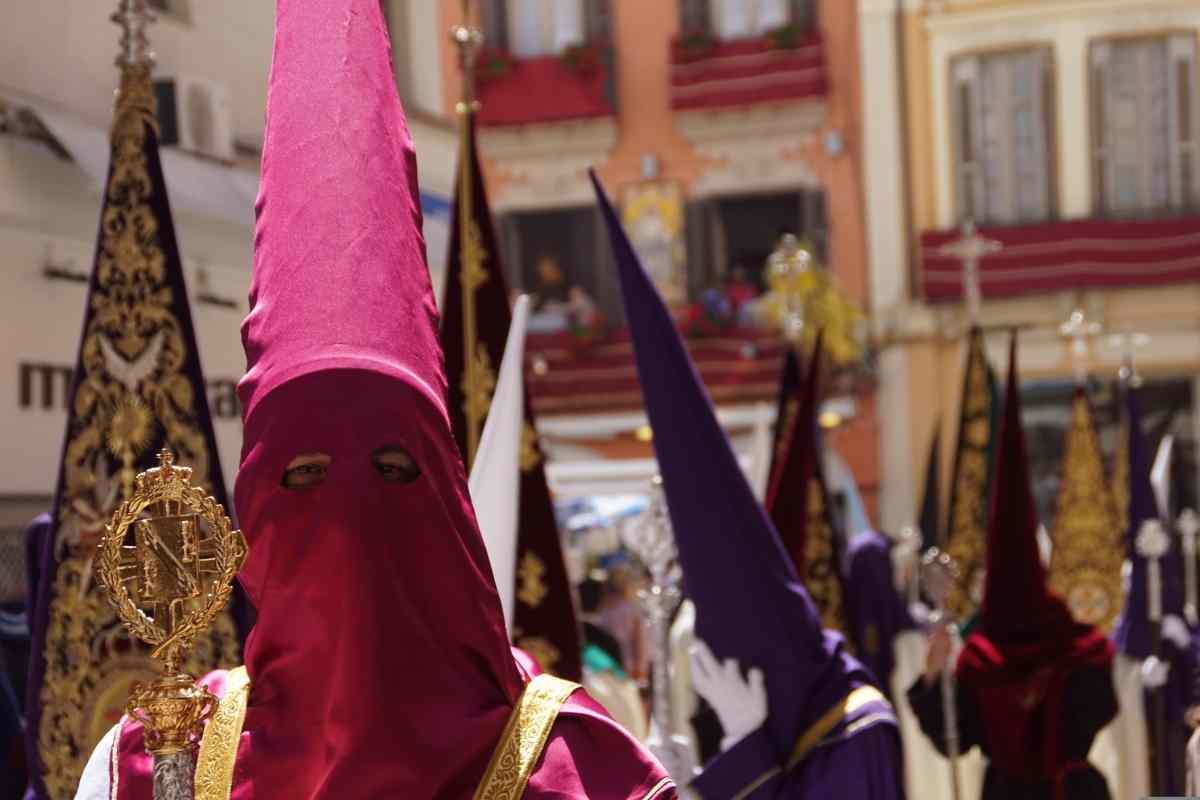
This tradition continues to this day. Some of the thrones are so heavy that up to 60 carriers (costaleros) are needed to lift them. Ahead of them walk countless members of the brotherhoods dressed in traditional robes. They wear long tunics and pointed hoods with eye openings, which may resemble those of the Ku Klux Klan—but they are not related. These garments originate from medieval penitential clothing, when sinners wore such hoods to publicly display their repentance. The Ku Klux Klan only adopted a similar aesthetic centuries later, in the 19th century.
The most important possession at a glance
Processions take place every day, but the most significant ones are on Sunday, Thursday, and Friday.
Semana Santa in Málaga begins with the famous Palm Sunday procession known as La Pollinica—a joyful and vibrant event that commemorates Jesus’ arrival in Jerusalem. Its main throne, depicting Jesus riding a donkey, is one of the most iconic images of the day and attracts large crowds each year. This day is also special because Málaga’s most famous actor, Antonio Banderas, traditionally takes part. A devoted supporter of Semana Santa, he joins his brotherhood, Lágrimas y Favores de Fusionadas, and walks in their procession.
On Maundy Thursday, eight different processions pass through Málaga. One of the most famous is the Congregación de Mena, known for its connection to the La Legión. The legion arrives in the city with a large spectacle and marches through the streets singing “El Novio de la Muerte.” The procession combines military presence with deep emotion, making it one of the most striking moments of the week.
Good Friday is marked by solemnity and mourning. Eight processions move through Málaga late into the night to commemorate the death of Christ. In contrast to earlier days, these processions are quieter and more contemplative. One of the largest and most important is that of the Cofradía de la Expiración.
Semana Santa concludes on Easter Sunday with the procession of the Resurrected Christ (Santísimo Cristo Resucitado y María Santísima Reina de los Cielos).
You can find an overview of all the possessions here.
Good to know
During Semana Santa, Málaga operates in an exceptional state. Especially if you live in the city centre, getting around—or even getting home—can become challenging due to street closures. It’s best to plan ahead and check which processions might be taking place while you’re out, so you don’t get stuck.
To follow the processions in real time, it’s very helpful to check the Instagram page of Diario Sur or download the app El Penitente, which shows exactly where each procession is at any moment.