
El Hospital de Santo Tomás is not just another abandoned building, but a profound piece of Málaga history, and now a symbol of the city’s deepest wound.
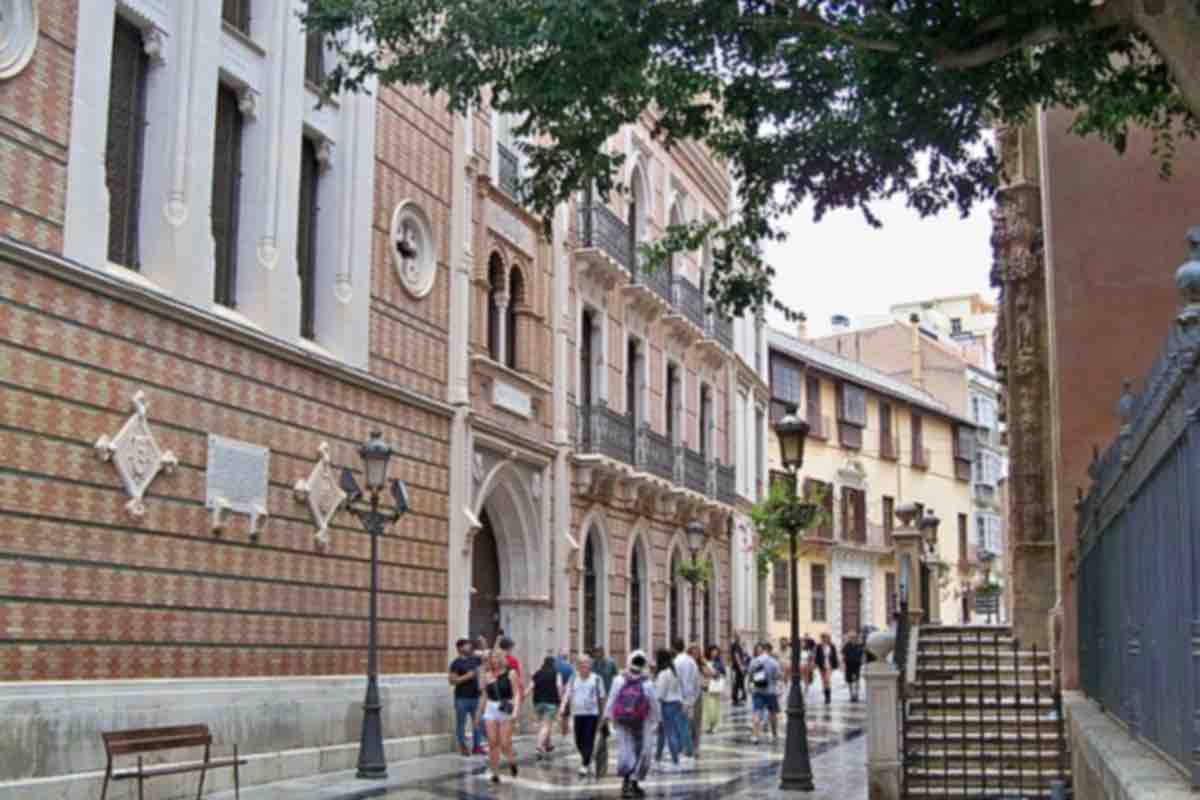
If you pass through Calle de Santa María, on your right you’ll find the astonishing Iglesia del Sagrario, one of the most beautiful churches in Málaga (and the most important example of Isabelline Gothic style!). But if you look to your left, you’ll find a hidden gem that carries a deep and profound history, a symbol of Málaga’s turmoils. We’re talking about the Hospital de Santo Tomás Apóstol, a historical monument abandoned for many years (as you’ll notice from the broken windows), and now a reason for Malagueños to protest.
To really understand what is happening, we have to go back to its first foundation. The year is 1492, when Diego García de Hinestrosa, a noble knight close to the Catholic Monarchs, was nominated Regidor (regent) of the city of Málaga. In 1505 he founded what was, at the time, the “Hospital de Pobres y Sacerdotes” (“hospital of the poor and of the priests”), a charitable institution under the administration of the Obispado (bishopric), which welcomed ill and poor people who could find shelter and assistance there.
For centuries this was its role, interrupted only by the terrible earthquake that hit Málaga on Christmas night in 1884. The building, however, was reconstructed only five years later and almost immediately returned to its original purpose (look at the entrance: on the side of the door you’ll find these two important years, 1505 and 1889). Throughout the entire twentieth century it served as a hospice and aid centre for poor elderly people, but around the 2000s and 2010s the condition of the structure kept worsening, to the point where it was eventually considered unusable.
What happens now? The anger of Málaga
If you passed in front of the building these days, or in the past months, you might have noticed the main door open, and sometimes workers coming and going with materials and tools. That is because the hospital is currently being restored, but not with its ancient purpose. The structure is still under the administration of the Obispado and, because of the high maintenance costs, they decided to rent the property under what is called “Derecho de superficie”, or “surface right”.
For years, the Málaga City Council had been working towards an incredible project that was meant to turn this historical site into a “luxury” student residence. As you can imagine, the project was very much appreciated: it was repurposing the building in a way that was respectful to the structure (already built with rooms) and to the cause, giving something back to Málaga’s community. In recent times, though, the surface rights were sold elsewhere: an Israeli multinational called Fattal Hotel Group bought the permits for the hospital and is now financing the renovation works to transform it into a luxury tourist residence.
The works started around 2023, with estimated investments of around ten million euros. The restorations have been going on for a while because of their extreme complexity: as the building is protected by law (grade one), it cannot be damaged in any way, and many ancient remains have also been discovered during the process. The result will be a four- or five-star boutique hotel with more or less fifty rooms, which should be completed around 2027.
Malagueños are not happy: the city already suffers greatly from overtourism, and that — mixed with the multinational that bought the rights and the complete cancellation of the student residence project — has caused years of anger and indignation. Many protests have happened and continue to happen, especially under the committee “Málaga para vivir”, one of the biggest movements of local resistance, under the slogan “Málaga no se vende” (Málaga is not for sale).
So whether you’re an expat or a tourist, now you know one of the city’s deepest wounds. It doesn’t matter the purpose for which we’re here; what matters is the awareness we have while exploring not just the city, but the community — and now you have it too.