
Here’s all you need to know about one of the most awaited event of the year, what to expect and, most importantly, why you shouldn’t miss it!
If you’re a movie enthusiast and you happen to be in Málaga, this is an event you simply cannot skip. Every year, Spain’s sunniest city hosts one of the most important celebrations of cinema and a key reference point for the Spanish and Latin American film industry: El Festival de Málaga – Cine en Español. The 29th edition will take place this year from Friday, March 6th to Sunday, March 15th, perfectly aligned with the arrival of the warmer season.
The Biznaga de Oro: Málaga’s Most Iconic Film Award
Like many major film festivals, this one includes an official competition in which directors and producers present films, short films, and feature films from Ibero-American countries. The highest prize is awarded to the “Best Film” and comes in the form of the Biznaga de Oro, a traditional Málaga ornament that has long symbolized the city. It is created by inserting jasmine buds into a dried thistle stem, forming a delicate floral sphere. Recognized as an artisanal masterpiece, a golden version is gifted to the winner of the festival, while silver versions of it are dedicated to other categories, such as Best Director, Acting and Critic’s Choice.
When Málaga becomes a city of cinema
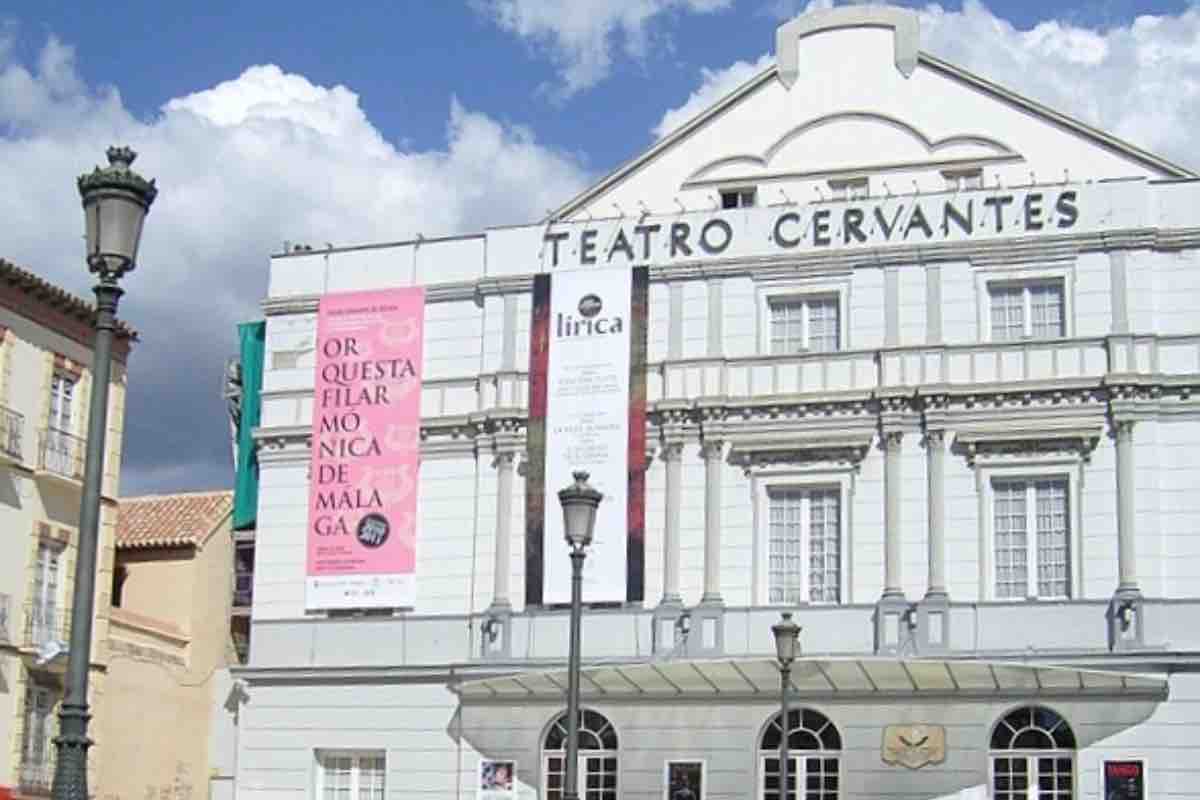
The heart of the festival beats in front of Teatro Cervantes, a historic institution in Málaga: Plaza Jeronimo Cuervo is transformed for the occasion into the iconic red carpet, that every year welcomes celebrities from all the Spanish speaking world, starting with the unforgettable Antonio Banderas (that, for those who don’t know, was born in Málaga!), the godfather of the festival.
As always, however, the festivities are not confined to a single venue. During the week-long event, all the city becomes immersed into a celebration of culture and art. Another red carpet outstretches for all the three hundred meters of Calle Marqués de Larios, that is also dedicated to the exposition of an outdoor photography exhibition: this year, the theme will be “Fuera de Plano” – “Off Camera”, a look at the unseen behind the scenes of past editions. A giant screen is installed in Plaza de la Constitución, allowing the public to follow the Teatro Cervantes red carpet in real time. More broadly, museums, cinemas, restaurants, and bars across the city join in the celebration with daily film-themed activities and special events.
But where did this idea originate? What significance does it hold? And why Málaga of all places?
Discovering the history: Málaga’s cultural rebranding
It all started in 1998, when Málaga’s City Council decided to promote this project. Spanish cinematic industry was, at the time, lacking a platform that showcased its masterpieces. This occasion was meant to serve as a launchpad for all Spanish movies, and since 2017, Latin-American as well.
A stepping stone for many emerging directors and actors, but also a recognition of the great works of internationally acclaimed figures. The godfather of the very first edition was the applauded actor Fernando Fernán Gómez, a symbol of the high levels to which Festival de Málaga was aiming. And the most fundamental role, that made the event iconic, was the work of the first ever festival director, Salomón Castiel, who served the city for eleven years.
Today, the Festival is one of the most awaited occasions of the year, and it has long been said that the films premiered here will surely be awarded in some way at the Goya Awards. In all of this, Málaga was the perfect location: it was already hosting, at the time, the French Film Festival, was home to a fervent cinematographic faculty, had prestigious theatrical institutions (like Teatro Cervantes), and was also the birthplace of many young talents (like Antonio Banderas).
Everything was part of a broader plan to rebrand the entire city, not just a summer destination, but as a cultural hub: these were the same years of the realization of Museo Picasso and Centro Pompidou. They certainly did not fail: Málaga has always been alive with arts and heritage, and now it’s more visible and more vibrant than ever.
So, either you’re here already, or planning your next big vacation, you cannot miss this incredible event: discover Málaga through new, cinematographic lenses!